
Print this page Brick Built This City: Walking The Brick Mile
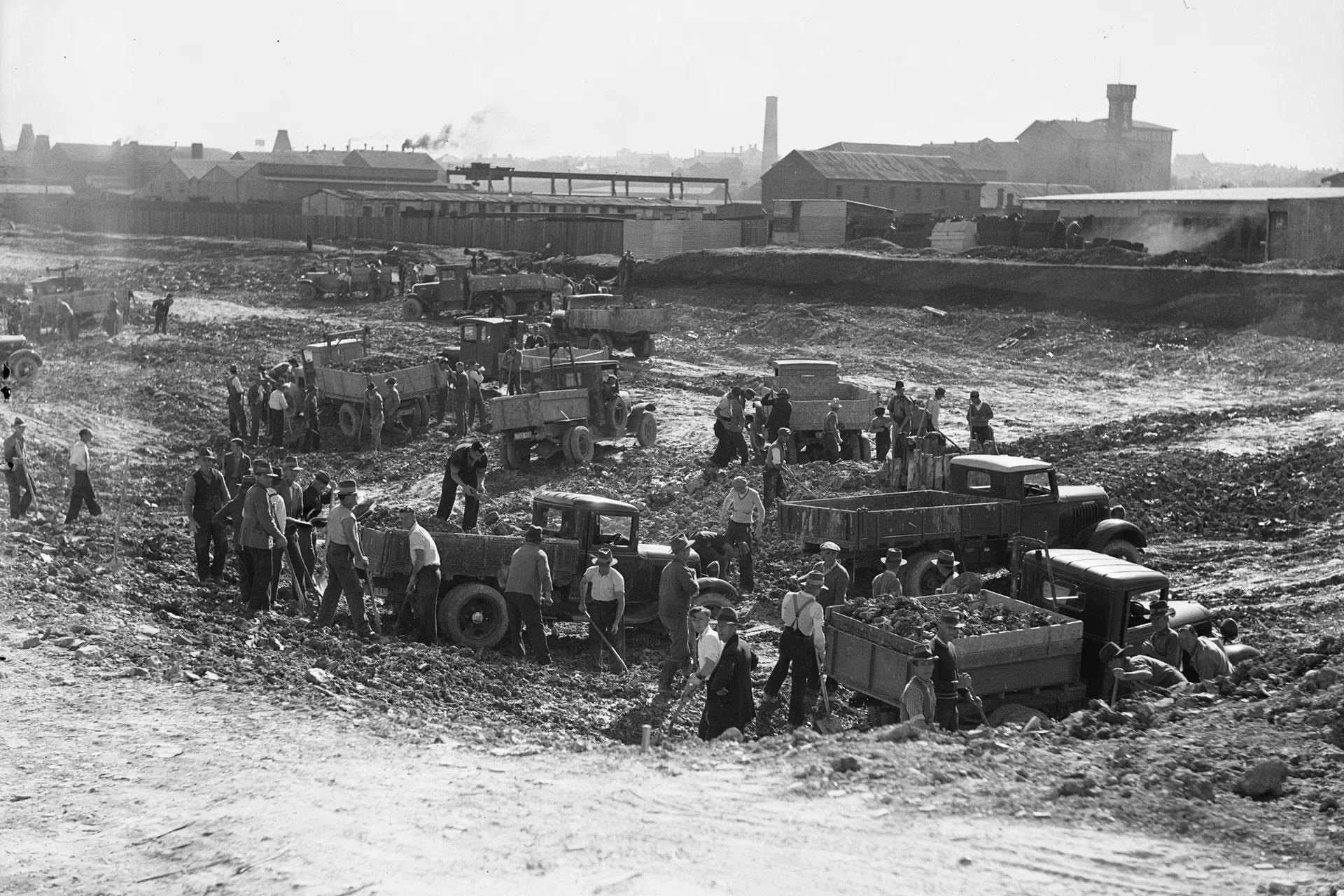
From around 1880, The economic history of this industry has left its imprint (literally) through brick constructions evident across the Inner West and far beyond. Advances in technology, the spread of mass production, shifting architectural tastes, and cycles of boom and bust reshaped how Australians built, lived, and imagined stability. Yet, when reserves of workable shales needed to produce bricks started to run low this was the opportunity for Sydney City Council to purchase the brickpits, many of which were mostly worked out by the early 1950s. The deep pits were progressively filled with city waste and in the case of the Bedford and Carrington yards that once occupied the land facing Sydney Park Road, the refuse was capped and landscaped to form parklands.
Through real places and historical case studies, participants examine how innovations in clay winning, kiln design, and production methods fueled suburban expansion and working‑class employment. This course traces how brick became both an architectural standard and a cultural ideal, exploring Australia’s enduring love affair with brick over the past 150 years.
Meet at St Peters Station on Princes Highway 10 minutes before the course starts. Check the Transport NSW website for further travel information on how to get there. Please ensure your mobile phone number is up-to-date with WEA before enrolling and ensure that you have it with you on the day in case the tutor needs to contact you.
DELIVERY MODE
Face to face
COURSE OUTLINE
- Technological change in brick production and kiln design
- Mass production and the growth of large brick companies
- St Peters, the Brick Mile, and urban expansion
- Labour, unions, child employment, and working‑class communities
- Depression years, war, postwar housing, and brick shortages
- Modern trends: texture bricks, McMansions, and housing shortages
LEARNING OUTCOMES
By the end of this course, students should be able to:
- Explain the historical importance of brick in Sydney’s built environment.
- Identify key changes in brickmaking technologies and production methods.
- Describe the social, economic, and labour impacts of the brick industry.
- Assess how brick has influenced housing styles and urban development over time.
NOTE: To enrol in the continuer's course, search "Brick Built This City: Shaping Sydney, 1788 to the Present Day" in the WEA Sydney website.
Course image courtesy of Mitchell Library, State Library of New South Wales: FL20748372